 Skip to content
Ever wondered why some content gets thousands of readers while others barely get a glance? The secret isn’t just good writing or perfect SEO, it’s SEO copywriting, the sweet spot where engaging content meets search engine optimization.
Let me show you exactly how to write content that real people want to read, and Google wants to rank.
What Is Copywriting and Why Does It Matter?
Before we dive into techniques, let’s clear up something basic: what is copywriting?
Copywriting is the skill of crafting persuasive language that motivates individuals to take action, such as buying a product or signing up for a newsletter, or simply reading the next sentence. It’s different from regular content writing because every word has a purpose.
A copywriter creates this persuasive content for marketing materials, websites, ads, and more. When you combine this skill with SEO knowledge, you become an SEO copywriter, someone who writes content that both humans love and search engines reward.
Think about Copy blogger’s approach to copywriting: they built a whole media company by teaching copywriting and using the same methods themselves. Their Copy blogger Copywriting 101 lessons show that great copy isn’t about tricks, it’s about knowing your audience and giving them real value.
Define Copywriting Success: What Makes SEO Copywriting Effective?
SEO copywriting brings together two important skills:
- Writing interesting content that keeps readers engaged.
- Optimizing that content so search engines can easily find it and rank it higher.
According to recent studies, well-ranked content typically balances keyword optimization with readability. Backlinko’s research on SEO copywriting shows that top-ranking pages use keywords strategically without sacrificing quality.
But here’s what most people miss: copywriting for SEO isn’t about stuffing keywords into boring text. It’s about creating content so good that people naturally want to link to it, share it, and spend time reading it.
When you master both aspects, you create content that:
- Ranks high in search results
- Keeps readers on your page longer
- Converts visitors into customers
- Gets shared on social media
- Earns natural backlinks
That’s the power of proper SEO copywriting techniques.
How to Master SEO Copywriting: A Step-by-Step Guide
Let me walk you through the steps of copywriting that actually work in 2026.
Step 1: Start with Deep Keyword Research
Before writing a single word, you need to know what people are searching for. Use tools like Ahrefs, SEMrush, or even free tools like Google Keyword Planner to find:
- Primary keywords your content should focus on
- Long-tail keywords that people really search for
- Questions your audience wants answers to
- Related topics that make your content stronger
Don’t just go after keywords with big search numbers. Look for keywords where you can truly give the best answer. That’s how you succeed in SEO copywriting.
Step 2: Understand Search Intent
Knowing what people search for isn’t enough; you also need to understand why they are searching.
Are they trying to:
- Learn something (informational intent)
- Find a specific website (navigational intent)
- Compare products or services before buying (commercial intent)
- Buy something right now (transactional intent)
Make sure your content matches the reason behind their search. If someone searches “what is a copywriter,” they want a clear explanation, not a sales pitch for your services.
Step 3: Craft Headlines That Hook
Your headline determines whether anyone reads your content. WordStream’s SEO copywriting guide emphasizes that eight in ten people read headlines, but only two in ten continue to read the full content.
Here are copywriting tips for headlines that work:
Use Numbers: “7 SEO Copywriting Techniques That Actually Work” is more attractive than “Good SEO Copywriting Techniques.”
Ask Questions: “How Can SEO Copywriting Improve Reader Engagement?” piques curiosity.
Make Promises: “Create SEO Content That Keeps Readers Hooked” clearly tells readers what they will learn.
Create Urgency: “Master SEO Copywriting Before Your Competitors Do” Creates a sense of urgency, compelling readers to act quickly.
Include your main keyword naturally, but never sacrifice clarity for SEO.
Include your main keyword naturally, but never sacrifice clarity for SEO.
Step 4: Write Introductions That Pull Readers In
Your introduction has one job: get people to read the next sentence.
Try the PAS formula (Problem-Agitate-Solution):
Problem: “Your blog posts get traffic, but nobody’s converting.”
Agitate: “You’re spending hours writing content that brings visitors who immediately bounce. Meanwhile, your competitors are turning readers into customers.”
Solution: “Here’s how to write a copy that both engages readers and ranks on Google.”
Another powerful technique is the APP Method (Agree-Promise-Preview):
- Agree: Start with something your reader already believes
- Promise: Show them the transformation you’ll deliver
- Preview: Tell them exactly what you’ll cover
Legendary copywriter Joe Sugarman taught that every sentence should compel readers to read the next one. That’s the real art of copywriting.
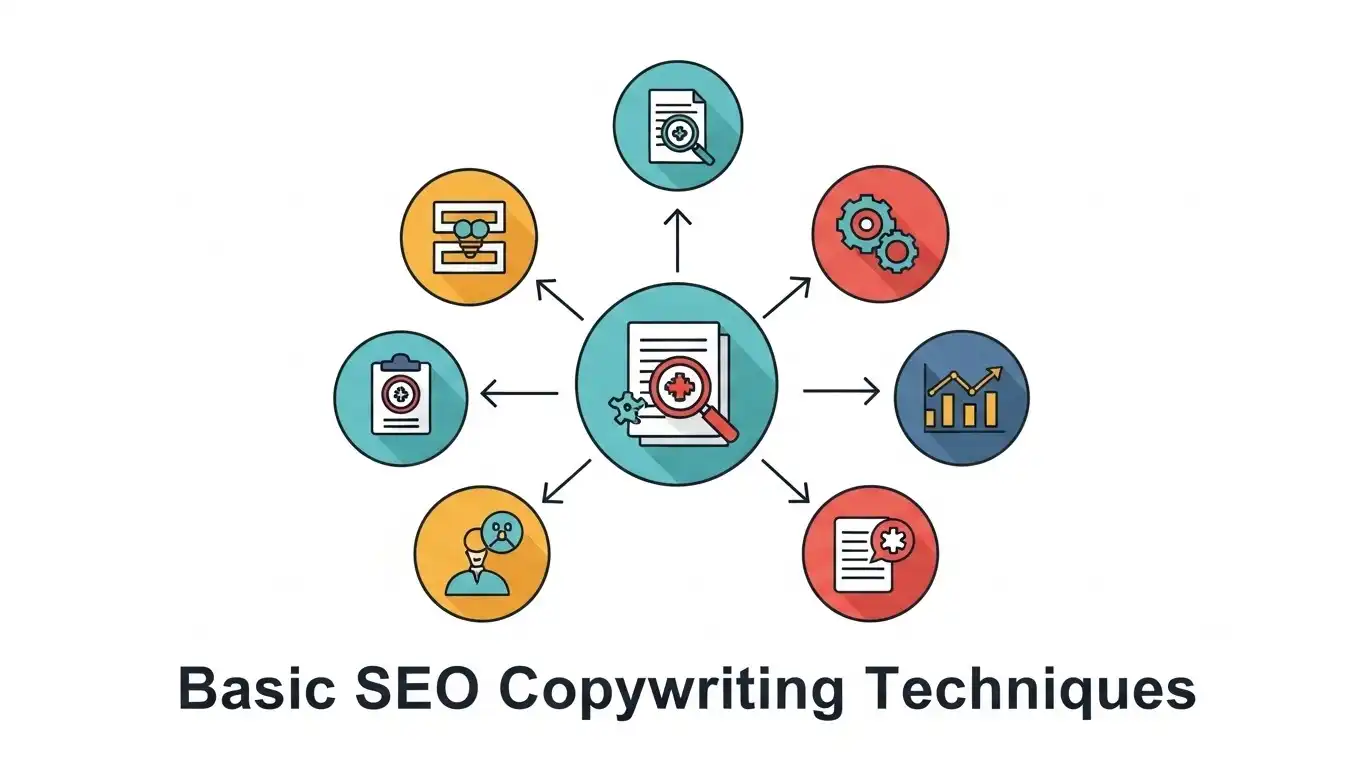
Basic SEO Copywriting Techniques You Need to Know
Now let’s get into specific SEO copywriting tips that keep readers engaged while satisfying Google’s algorithms.
Use Bucket Brigades to Keep Readers Scrolling
Bucket Brigades are transitional phrases that create curiosity gaps. They make it nearly impossible to stop reading.
Examples:
- “Here’s the thing:”
- “But wait, there’s more:”
- “Here’s where it gets interesting:”
- “The truth is:”
- “Now, here’s why this matters:”
These phrases work because they create mini cliffhangers. Your brain wants closure, so you keep reading. Backlinko uses this technique extensively and sees significantly higher time-on-page metrics.
Write in Short, Scannable Chunks
Nobody reads word-for-word anymore. People scan.
Structure your content with:
- Short paragraphs (2-4 sentences maximum)
- Subheadings every 200-300 words
- Bullet points for lists
- Bold text to highlight key phrases
- White space to give the eyes a rest
According to Yoast’s research on SEO copywriting, content that’s easy to scan gets better engagement metrics, which Google notices.
Target Keywords Naturally (Not Forcefully)
Modern SEO copywriting means using keywords where they make sense, not cramming them everywhere.
Include your main keyword in:
- Your H1 headline
- First 100 words of content
- At least one H2 subheading
- Naturally, throughout the body
- Your meta description
- Your URL slug
But also use variations and related terms. If your keyword is “SEO copywriter,” also use “SEO copywriting,” “copywriter SEO,” and “copywriting for SEO” naturally.
Google’s algorithms are smart enough to understand context. Focus on answering questions thoroughly rather than hitting arbitrary keyword density targets.
Add Internal Links to Related Content
Smart SEO copywriting connects readers to other valuable content on your site.
For example, if you’re an SEO and Google Ads expert like Osama Naseem, you’d link to related articles about search engine optimization, PPC strategy, or digital marketing training.
Internal linking:
- Keeps readers on your site longer
- Assists Google in comprehending the structure of your website.
- Shares page authority across your site
- Gives extra helpful info to readers
Include External Links to Authority Sites
Don’t be afraid to link out to quality sources. Linking to sites like Google, SEMrush, Ahrefs, and other authorities:
- Adds credibility to your content
- Provides additional resources for readers
- Shows Google you’re part of a larger conversation
- Can lead to reciprocal mentions over time
Just make sure external links open in new tabs so readers don’t leave your site completely.
Advanced SEO Copywriting Strategies That Work
Ready to go beyond the basics? These advanced techniques separate good from great SEO copywriting.
Use Fascinations to Build Curiosity
Fascination’s copywriting is a classic direct-response technique that creates irresistible curiosity. Instead of giving everything away, you tease valuable information.
Instead of: “We’ll teach you keyword research.”
Try: “The surprising keyword research method that tripled our organic traffic (and why most marketers never discover it).”
These curiosity-driven phrases make readers feel like they’ll miss out if they don’t keep reading. These curiosity-driven phrases make readers feel like they might miss something important if they stop reading.
Incorporate Copywriting Examples for Products
Specific examples make abstract concepts concrete. When teaching copywriting for SEO, don’t just explain, show.
Bad example: “Good headlines get clicks.”
Good example with specifics: “When we changed our headline from ‘SEO Tips’ to ’17 SEO Copywriting Techniques That Increased Our Traffic 214%’, our click-through rate jumped from 2.1% to 8.7%”
Real data, specific numbers, and concrete results make your copywriting examples for products or services much more convincing.
Master the ASMR Formula for Engagement
No, not that ASMR. In copywriting, ASMR stands for Annotation, Short, Medium, and Repetition, a formula for creating scannable content:
- Annotation: Use bold, italics, and highlights strategically
- Short: Keep sentences and paragraphs brief
- Medium: Mix short and medium-length sections
- Repetition: Reinforce key points without being redundant
This approach keeps content engaging without overwhelming readers.
Create Visual Breaks with Formatting
Research from SurferSEO shows that articles with strong visual hierarchy get better engagement:
- Use H2 and H3 headings to organize content
- Add images every 300-400 words
- Include infographics for complex data
- Use pull quotes to highlight key insights
- Add callout boxes for important tips
These visual elements break up text and make content feel less dense.
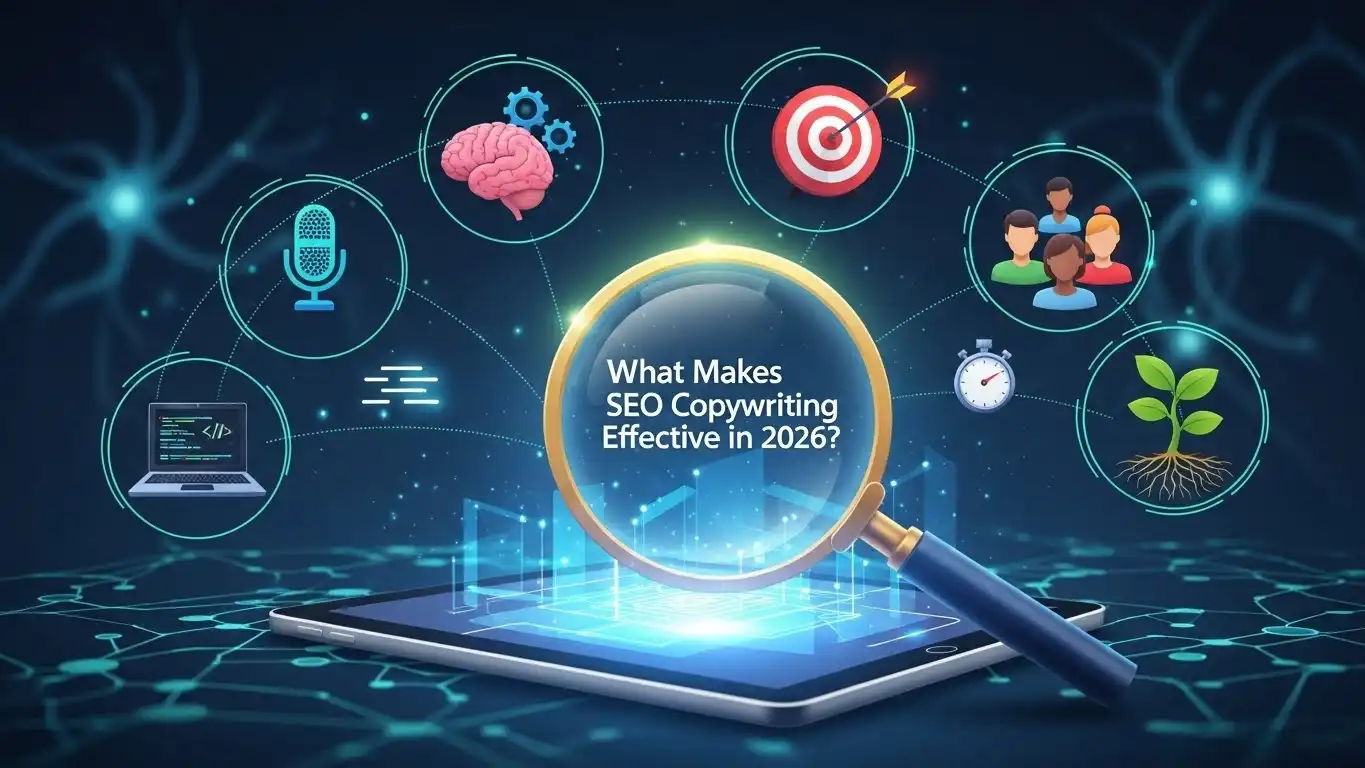
What Makes SEO Copywriting Effective in 2026?
The landscape keeps evolving. Here’s what makes SEO copywriting effective right now:
E-E-A-T Principles
Google’s E-E-A-T (Experience, Expertise, Authoritativeness, Trustworthiness) guidelines mean you need to demonstrate real knowledge.
Show your experience by:
- Including personal case studies
- Adding specific results you’ve achieved
- Linking to your credentials
- Being transparent about your background
For instance, when certified Google Ads and SEO expert Osama Naseem writes about digital marketing strategy, he references his 15+ years of hands-on experience. That’s E-E-A-T in action.
Helpful Content That Actually Helps
Google’s Helpful Content Update targets content written primarily for search engines rather than people.
Your SEO copywriting should:
- Answer questions completely
- Provide actionable advice
- Include unique insights
- Avoid fluff and filler
- Give readers what they came for
Mobile-First Optimization
Most readers access content on mobile devices. That means:
- Shorter paragraphs work better on small screens
- Larger font sizes improve readability
- Tap-friendly buttons increase conversions
- Fast load times prevent bounces
Test your content on mobile before publishing. If it’s hard to read on your phone, it needs work.
Conversational, Natural Tone
The days of stiff, corporate writing are over. Modern SEO copywriting techniques embrace conversational language.
Write like you’re explaining something to a friend:
- Use “you” and “I.”
- Ask questions
- Share personal experiences
- Admit what you don’t know
- Show personality
This approach builds trust and keeps readers engaged.
How to Write SEO Copy That Converts
Getting traffic is great. Converting that traffic into customers is better.
Use Strategic Calls-to-Action (CTAs)
Don’t wait until the end to tell readers what to do next. Include CTAs throughout your content:
- After explaining a benefit: “Ready to see results like these? Contact us.”
- After sharing a tip: “Want more strategies like this? Subscribe to our newsletter.”
- After case studies: “Let’s discuss how we can help your business.”
Make CTAs specific, action-oriented, and relevant to the section they’re in.
Address Objections Proactively
Good copywriting for SEO anticipates what might hold readers back and addresses those concerns.
Worried about cost? Show ROI.
Worried about complexity? Provide step-by-step guidance.
Worried about risk? Offer guarantees or case studies.
Build Social Proof
People trust what others say about you more than what you say about yourself.
Include:
- Client testimonials with specific results
- Case studies with real numbers
- Awards and certifications
- Media mentions
- User reviews
These elements transform your SEO copywriting from promotional to persuasive.
Common SEO Copywriting Mistakes to Avoid
Even experienced writers make these errors:
Keyword Stuffing
Using your target keyword 50 times in a 1,000-word article doesn’t help; it hurts. Write naturally, and keywords will appear where they make sense.
Ignoring Readability
Complex sentences and industry jargon might sound impressive, but they alienate readers. Tools like Hemingway Editor help identify overly complex writing.
Writing for Search Engines First
Remember: you’re writing for people. Search engines are just the delivery mechanism. If your content sounds robotic, readers will leave, people will bounce, and Google will notice.
Forgetting Meta Descriptions
Your meta description is prime real estate. It should:
- Include your main keyword
- Create curiosity
- Promise value
- Stay under 155 characters
A great meta description improves click-through rates, which signals quality to Google.
Not Updating Old Content
SEO copywriting isn’t write-once-and-forget. Regularly update your top-performing articles with:
- New information
- Updated statistics
- Fresh examples
- Additional insights
This signals to Google that your content stays current.
Frequently Asked Questions About SEO Copywriting
What is SEO copywriting, and how does it differ from regular copywriting?
SEO copywriting combines persuasive writing techniques with search engine optimization strategies. While regular copywriting focuses solely on converting readers, SEO copywriting also ensures content ranks well in search engines by incorporating targeted keywords, proper formatting, and technical optimization, all while maintaining readability and engagement.
How can SEO copywriting improve reader engagement?
Effective SEO copywriting techniques improve engagement by creating scannable content with clear headings, short paragraphs, and visual breaks. Techniques like bucket brigades, the PAS formula, and strategic internal linking keep readers moving through your content while providing genuine value that answers their questions completely.
What are the most important SEO copywriting tips for beginners?
Start with thorough keyword research, understand search intent before writing, craft compelling headlines, use short paragraphs and bullet points, include your main keyword in strategic locations (headline, first paragraph, subheadings), add relevant internal and external links, and always prioritize readability over keyword density. Most importantly, write for humans first, search engines second.
Why is SEO copywriting important for your website?
SEO copywriting drives organic traffic by helping your content rank in search results while simultaneously converting that traffic into leads or sales. It’s the bridge between visibility and profitability. Without it, your website either gets traffic that doesn’t convert or creates great content that nobody finds.
What tools do professional SEO copywriters use?
Professional SEO copywriters typically use keyword research tools like Ahrefs, SEMrush, or Ubersuggest; readability checkers like Hemingway Editor or Grammarly; SEO optimization tools like Yoast SEO or Surfer SEO; and analytics platforms like Google Search Console and Google Analytics to measure performance and refine their strategy.
How do I describe the steps of copywriting effectively?
The steps of copywriting follow a clear process: research your audience and keywords, understand search intent, create an outline based on top-ranking content, write a compelling headline, craft an engaging introduction, develop body content with clear structure and examples, include strategic CTAs throughout, optimize for SEO technical elements, edit for clarity and readability, and finally publish and promote your content.
What makes a copywriter successful in SEO?
A successful SEO copywriter combines writing talent with technical knowledge. They understand how search engines work, can research keywords effectively, write compelling content that engages readers, structure content for both humans and algorithms, analyze performance metrics, and continuously adapt their strategy based on results. Experience with tools, understanding of user psychology, and ability to balance creativity with data are all crucial.
Can you provide copywriting examples for products that convert?
Effective copywriting examples for products focus on benefits over features, use specific numbers and results, address customer pain points, and include social proof. For example, instead of “Our software has advanced analytics,” try “Track exactly where your 10,000+ monthly visitors come from and which content generates the most leads so you know exactly what’s working and what needs improvement.”
Take Your SEO Copywriting to the Next Level
You now have everything you need to write an SEO copy that ranks well and keeps readers hooked. But knowledge alone won’t move the needle; you need to apply these SEO copywriting techniques consistently.
Start with one piece of content. Use the strategies you’ve learned here:
- Research keywords that match search intent
- Write headlines that demand attention
- Structure content for easy scanning
- Include bucket brigades and curiosity gaps
- Add strategic internal and external links
- Optimize for both humans and search engines
- Include clear calls-to-action
Then measure your results. Track time on page, bounce rate, scroll depth, conversions, and search rankings. Double down on what works and adjust what doesn’t.
SEO copywriting isn’t a one-time skill; you master it’s an ongoing practice that evolves with search algorithms, user behavior, and your own experience.
Ready to Transform Your Content Strategy?
If you’re serious about dominating search results and turning traffic into revenue, you need a strategic approach to SEO and copywriting that goes beyond basic techniques.
Whether you’re building your own blog, running an e-commerce business, or managing content for clients, the principles you’ve learned here work across all industries and niches.
Want expert guidance on implementing these strategies? Osama Naseem specializes in helping businesses create SEO content that drives measurable results. With over 15 years of experience in search engine optimization and Google Ads management, he combines technical SEO knowledge with persuasive copywriting to help brands scale their online presence.
Take action today:
- Audit your existing content using these techniques
- Implement the strategies on your highest-traffic pages first
- Test different approaches and measure results
- Keep learning and adapting as SEO evolves
The distinction between content that goes unnoticed and content that captures attention lies in its relevance, value, and ability to engage the audience and generate leads which often comes down to applying the right SEO copywriting techniques. Now you have them. The only question is: what will you do with this knowledge?
Start writing content that both readers and Google can’t resist. Your future self will thank you.
About the AuthorThis guide was created based on proven SEO copywriting strategies used by top-ranking content creators and digital marketing experts. For personalized help with your SEO and content strategy, visit osamanaseem.com to learn how Osama Naseem’s expertise in Google Ads and SEO can help your business grow.
